5 Big Myths About Presbyopia: Don't Let Your Social Feed Fool You!

Have you ever been scrolling through your phone, perhaps checking in on old school friends or looking at photos of the grandkids, and suddenly realized you're holding the phone so far away your arm is starting to ache? Or maybe you've seen one of those "miracle" videos claiming that if you just eat this one exotic berry or roll your eyes in a circle ten times, you'll never need reading glasses again.
Believe me, I get it. We all want to keep that sharp, "eagle-eye" vision we had in our thirties. But there is so much misinformation floating around the internet these days that it's hard to tell what's a real health tip and what's just a "tall tale."
Today, we are going to look deeper than the surface. We will debunk five common myths about Presbyopia (the natural, age-related change in near vision) and explore how to professionally care for your eyes through environmental mastery, nutritional wisdom, and gentle habits. This is your guide to seeing the world with clarity and comfort, without the "fog" of misinformation.

I. Understanding the "Focusing Engine": Why Eyes Change After 50
Before we dive into the myths, let's talk about the incredible "camera" inside your head. Your eye has a Natural Lens that works like an advanced autofocus system.
🔷 The Mechanics of Accommodation 🔷
When you look at something close, like a needle or a smartphone, a tiny, circular muscle called the ciliary muscle contracts. This allows the lens to become "fatter" and change its power to focus on near objects. This process is called Accommodation.
🔷 The "Hardened Crystal" Reality 🔷
As we move into our 50s and 60s, the proteins inside the lens undergo a natural change. Think of the lens in your 20s as a clear, flexible jellybean. In your 60s, that "jellybean" becomes more like a hardened piece of crystal.
- The Result: Even if your ciliary muscle is strong, the lens itself can no longer "squish" into shape. This is why the focus becomes blurry. It is a biological evolution, much like our hair turning silver; it's a marker of life's journey.

II. Debunking the 5 Big Myths of Presbyopia
❌ Myth #1: "If I start wearing reading glasses, my eyes will get 'lazy'." ❌
This is perhaps the biggest lie out there! I've met so many people who "tough it out" for years, squinting at menus and suffering from evening headaches because they think they are "training" their eyes to stay strong.
- ✔️The Reality Check: Wearing reading glasses doesn't make your eyes lazy; it stops your brain from overworking.
- ✔️The Bicycle Analogy: Think of reading glasses like a bicycle. If you walk five miles, you do all the work. If you ride a bike, the gears help you get there with less strain. Using the bike doesn't make your legs stop working; it just makes the journey efficient.
- ✔️The Risk of Delay: When you squint, you aren't fixing the lens; you are straining the external muscles of your face and forehead. This leads to "Accommodative Fatigue," which can cause chronic tension and actually make your vision feel "foggier" than it really is.
❌ Myth #2: "You can 'cure' presbyopia with special eye exercises." ❌
You've likely seen the advertisements: "Do these 5-minute eye rolls and throw away your glasses!" It sounds wonderful, but it ignores the anatomy of the eye.
- ✔️The Reality Check: While "eye yoga" is excellent for relaxing tired muscles, it cannot change the internal physical structure of the lens.
- ✔️Internal vs. External: Eye exercises work on the six muscles outside the eyeball that move it up and down. Presbyopia happens to the lens inside the eyeball.
- ✔️The "Gray Hair" Comparison: You cannot "exercise" your hair back to its original color. However, you can learn to care for its texture and health. Habits can help you manage the strain, but they won't turn the "hardened crystal" back into "jelly."
❌ Myth #3: "Eating a mountain of carrots will fix my vision." ❌
We've heard this since we were toddlers: "Eat your carrots so you can see in the dark!"
- ✔️The Reality Check: Carrots contain Vitamin A, which is essential for night vision, but they aren't the whole story.
- ✔️The "Green Shield": The real heroes for aging eyes are Lutein and Zeaxanthin. These are found in deep leafy greens and bright gold vegetables. They act like "internal sunglasses" for your retina, filtering out harsh light.
- ✔️Variety is Key: Your eyes need a variety of colored "vitamins," such as green, gold, orange, and red, to protect the delicate tissues at the back of your eyeballs.
❌ Myth #4: "Reading in dim light will permanently ruin your eyes." ❌
Our parents used to scold us: "Turn on a lamp or you'll go blind!"
- ✔️The Reality Check: Reading in low light won't cause permanent damage, but it makes your "misty" vision feel significantly worse.
- ✔️The Pupil Factor: As we age, our pupils stay slightly smaller and react more slowly. This means the back of your eye receives much less light than it did in your youth.
- ✔️The Stress Response: When you read in the dark, your brain has to work 10x harder to "fill in the gaps" of the blurry letters. Brightness is a nutrient for the eyes.
❌ Myth #5: "Surgery is the only real solution left." ❌
Many feel that once the "fog" sets in, they must choose between "granny glasses" or the operating table.
- ✔️The Reality Check: Surgery is a significant medical decision and is not the right path for everyone. There are vast "layers of care" between glasses and surgery. By mastering your environment, nutrition, and habits, you can maintain a high quality of life and visual comfort for decades.

III. The "Kitchen Pharmacy": Feeding Your Clarity
Your eyes are among the most energy-hungry organs in your body. They consume more oxygen and nutrients per gram than almost any other tissue.
1. The "Internal Sunglasses": Lutein & Zeaxanthin
These two nutrients accumulate in the retina to filter out harmful blue light and reduce glare.
- ✔️Where to find them: Spinach, Kale, Collard Greens, and Egg Yolks.
- ✔️Pro-Tip: Always eat these greens with a little healthy fat (like olive oil or avocado), as these nutrients are fat-soluble and need it to be absorbed!
2. The "Micro-Circulation" Boosters: Vitamin C & E
The tiny capillaries in your eyes need to stay flexible to deliver oxygen to the lens.
- ✔️Where to find them: Red bell peppers, almonds, sunflower seeds, and citrus fruits.
3. The "Lubrication" Flow: Omega-3 Fatty Acids
If your eyes feel "gritty" like there is sand behind the lids, you may be lacking healthy fats.
- ✔️Where to find them: Walnuts, Chia seeds, flaxseeds, and fatty cold-water fish.
- ✔️Why it works: These fats help produce the "oil layer" of your tears, preventing them from evaporating too quickly in dry indoor air.
IV. Master Your Environment: A Home Improvement Guide
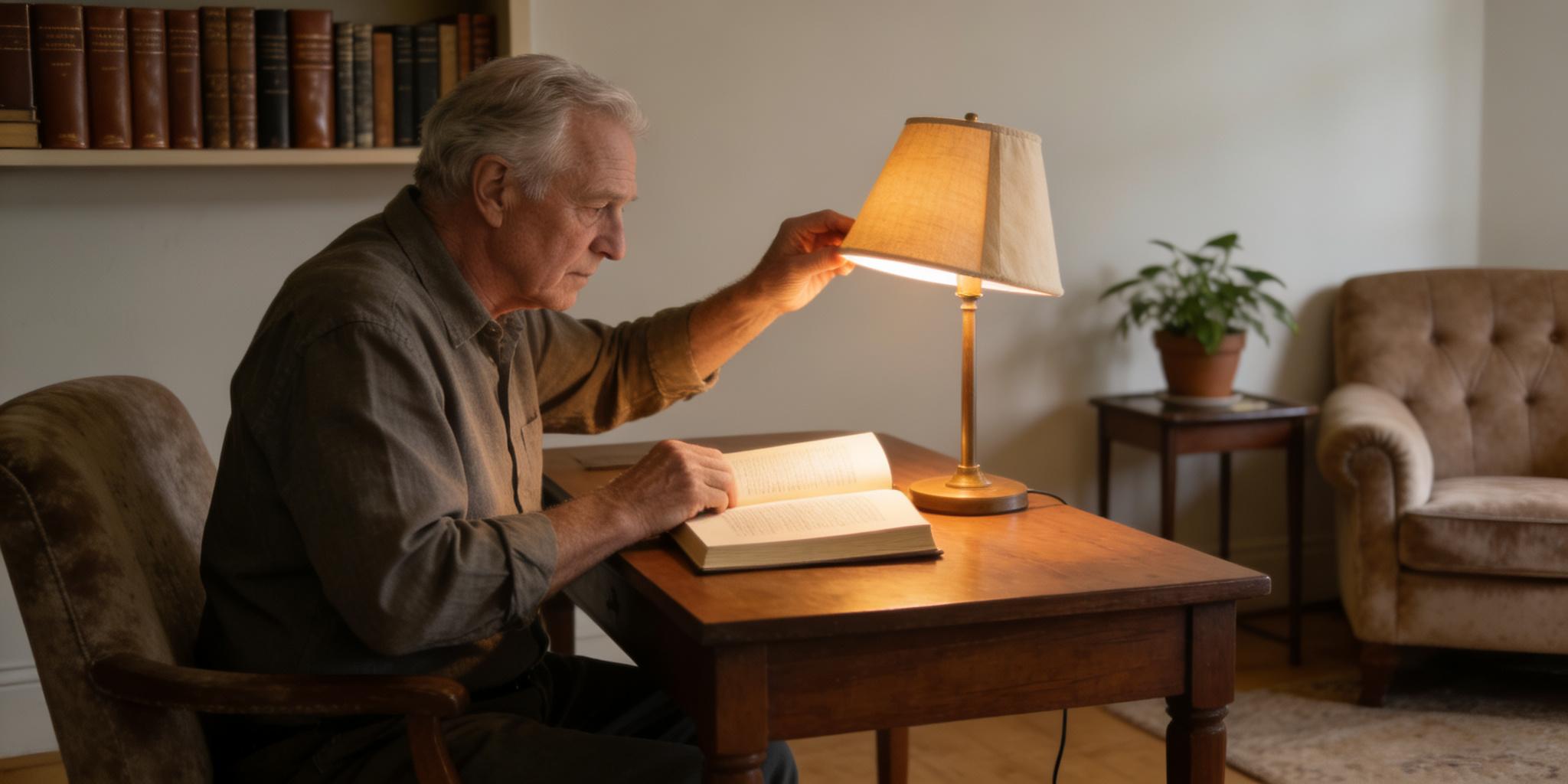
Sometimes, the "fog" in your vision doesn't come from your eyes, but from your living room. Slightly changing the way your home's lighting works can make your eyesight feel ten years younger.
1. Task Lighting vs. Ambient Lighting
- The Mistake: Having a dark room with one bright lamp pointed at your book. This creates a "Flashlight Effect" that causes the pupil to constantly expand and contract, leading to a "pulling" headache.
- The Fix: Keep the room moderately lit (Ambient) and add a focused lamp (Task) directly on your work.
2. The "Handheld Distance" Rule
- The Golden Rule: Hold your phone or book at least 16 to 18 inches away.
- Why? Holding it closer forces your ciliary muscle into a "maximum clinch." Give that muscle some breathing room!

V. Interactive Checklist: Is Your Home Lighting "Eye-Friendly"?
Take a moment to walk through your favorite reading or sitting spot. Check these five indicators to see if your environment is supporting or straining your sight:
The Glare Check: Sit in your usual chair. Are there reflections of windows or lamps on your TV or tablet screen?
- [ Fix: Adjust the angle or add a "Matte" screen protector. ]
The 3:1 Brightness Ratio: Is your tablet screen more than 3 times brighter than the wall behind it?
- [ Fix: Turn up the room lights or turn down the screen brightness until they feel "blended." ]
The "Shadow" Test: Hold your hand over your book. Are there sharp shadows cast by your head or body?
- [ Fix: Move your lamp so the light comes from the side (left side if you are right-handed). ]
The Flicker Factor: Are you using old fluorescent bulbs that have a tiny, invisible flicker?
- [ Fix: Switch to high-quality LED bulbs with a "Natural Daylight" rating (approx. 4000K). ]
The Font Liberation: Look at your smartphone. Is the text so small that you have to squint your forehead to read a text message?
- [ Fix: Go to Settings > Display > Text Size and move it up to 125%. ]

VI. Gentle Habits & "Eye Yoga": For Relaxation, Not a Cure
While we know exercises won't "fix" the lens, they are essential for releasing tension. Think of this as a "Spa Day" for your optic nerve.
👁️🗨️1. The "Palming" Method: Total Sensory Silence
This is the most effective way to reset a stressed visual system.
- Step 1: Rub your palms together vigorously until they feel warm.
- Step 2: Close your eyes and gently cup your palms over them. Do not press on the eyeballs.
- Step 3: Ensure no light is getting through. Breathe deeply for 2 minutes.
- The Benefit: In total darkness and warmth, the sensing cells in your retina can "reset" and recover from glare.
👁️🗨️2. The 20-20-20-20 Expansion
- The Rule: Every 20 minutes, look at something 20 feet away for 20 seconds, and blink 20 times.
- Why the Blinks? We blink 60% less when focusing on screens. This "Triple-20" rhythm restores moisture and blood flow simultaneously.
👁️🗨️3. The "Soft Figure Eight"
- The Move: Imagine a giant "8" on the floor 10 feet in front of you. Slowly trace it with your eyes for one minute.
- The Benefit: This helps the six muscles outside the eye stay fluid and coordinated.
VII. Nighttime eye compress
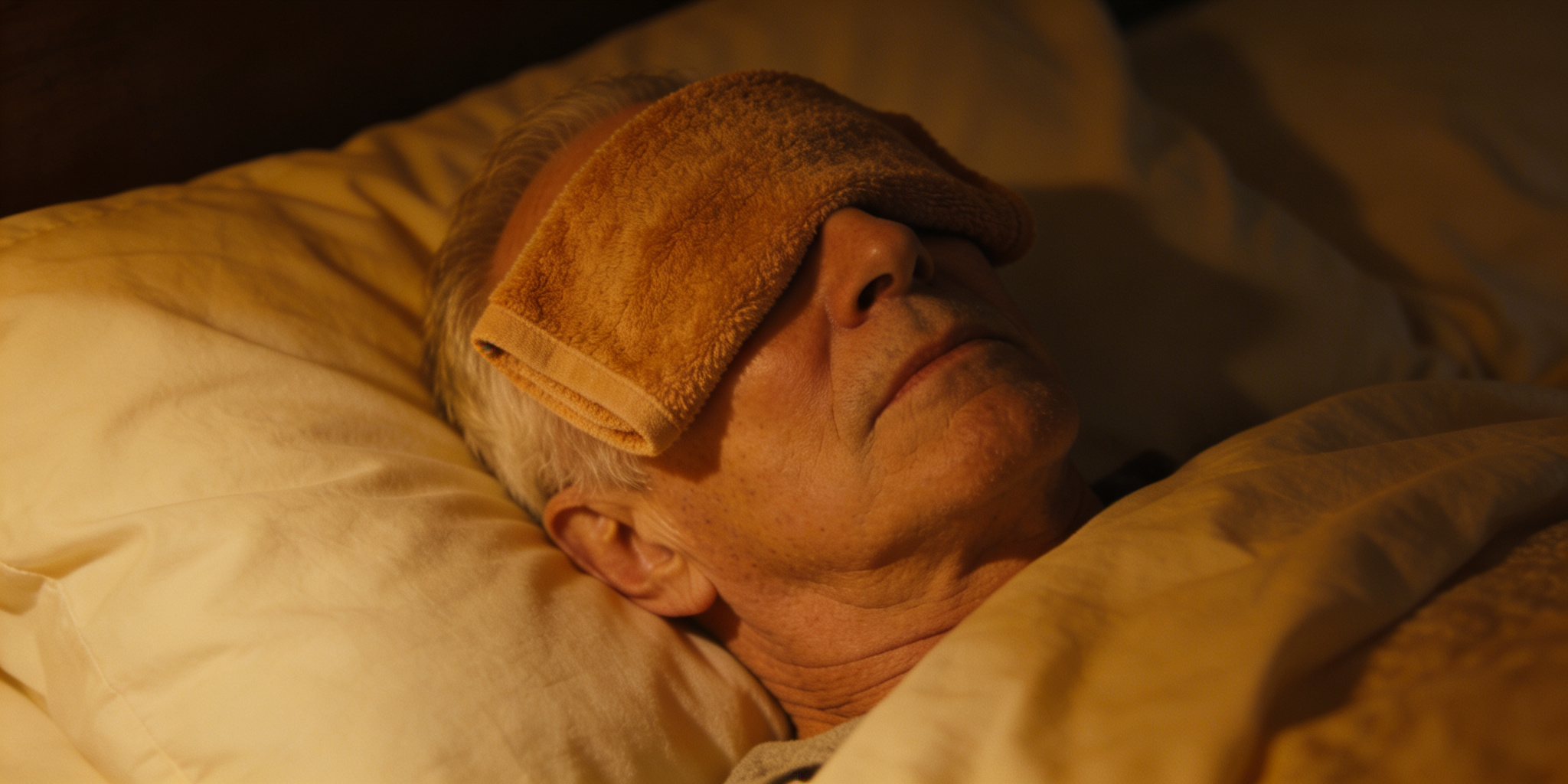
Before bed, give your eyes a warm compress.
- ✅Soak a clean washcloth in warm (not hot!) water.
- ✅Lay it over your closed eyes for 5 minutes.
- ✅Why? This melts the natural oils in the tiny glands along your eyelashes. This ensures that when you wake up, your eyes are lubricated and clear, rather than "stuck" and dry.

Becoming the Guardian of Your Sight
Don't be fooled by those "miracle berries" or "intensive eye training" claims on social media. Your eyes don't need a "devil's camp"; they need a peaceful oasis. By consuming sufficient golden and green nutrients, optimizing indoor lighting, and ensuring adequate rest, you can have bright and clear eyes. Your eyes have protected you throughout your life; now it's your turn to take care of them.
Final Tip: Tonight, try the "Palming" method for just two minutes before you sleep. You'll be amazed at how much softer the world looks tomorrow morning!