3 Mistakes When Choosing Reading Glasses: Why You Should Never Buy From a Street Stall!
Hello, my dear friends. Let's take a moment to sit down, perhaps with a warm cup of coffee or tea, and talk about something that sits right on the bridge of our noses every single day.

I was at the local market the other day, and I saw a scene that made my heart sink just a little bit. A gentleman was standing in front of a cardboard box filled with hundreds of pairs of colorful reading glasses. He was picking them up, one by one, trying to read a small slip of paper, and shaking his head. "This one is too blurry," he muttered. "Ah, this one... this one seems okay for five dollars." He tucked them into his pocket, paid his bill, and walked away.
I wanted to reach out and say, "Wait! Our eyes are the only pair we'll ever have. Let's not treat them like a bargain-bin spare part!"
We are thrifty and practical people, and it is tempting to think, "It's just for reading the newspaper; why spend more?" But have you noticed that even with those cheap glasses, your eyes feel exhausted after twenty minutes? Or maybe you get a nagging headache right between your brows? Today, we will explore the science behind why those "convenience" glasses might be doing more harm than good and how to truly manage your visual assets for the years to come.
I. The Warning Signs: Is Your Vision Feeling "Heavy"?

Before we discuss the glasses themselves, we must listen to what our bodies are telling us. "Blurriness" is only the tip of the iceberg. If you experience the following, your current eyewear may be causing Visual Stress:
- ⚠️The "Sweet Spot" Tilt: You put on your glasses but find yourself constantly tilting your head or moving the book back and forth to find one tiny clear patch.
- ⚠️The "Sandy" Sensation: After reading, your eyes feel gritty, dry, or like they have "sand" in them. This is often because your brain is forcing your eyes to stay open wider to compensate for poor lens quality.
- ⚠️The "Sea-Sickness" Effect: You feel a slight sense of dizziness or nausea when you look up from your tablet or stand up quickly while wearing your readers.
- ⚠️The Brows-Tension Headache: A dull ache that starts right between your eyebrows after 15 minutes of focus.
II. 3 Mistakes When Choosing Reading Glasses
❌ Mistake #1: The "Identical Twin" Fallacy ❌
The biggest problem with ready-made glasses is the assumption of symmetry. They are manufactured like a pair of shoes where both the left and right are exactly the same size.
1. Human Asymmetry is the Norm
In reality, our eyes are rarely identical. Just as one hand is often slightly stronger, one eye usually requires a different level of assistance than the other. This condition is called Anisometropia.
- The Trap: If your left eye needs a +2.25 and your right eye needs a +1.75, but you buy a "standard" +2.00 pair, both eyes are now struggling.
- The Result: One eye is "over-powered" while the other is "under-powered."
2. The "Tug-of-War" in the Brain
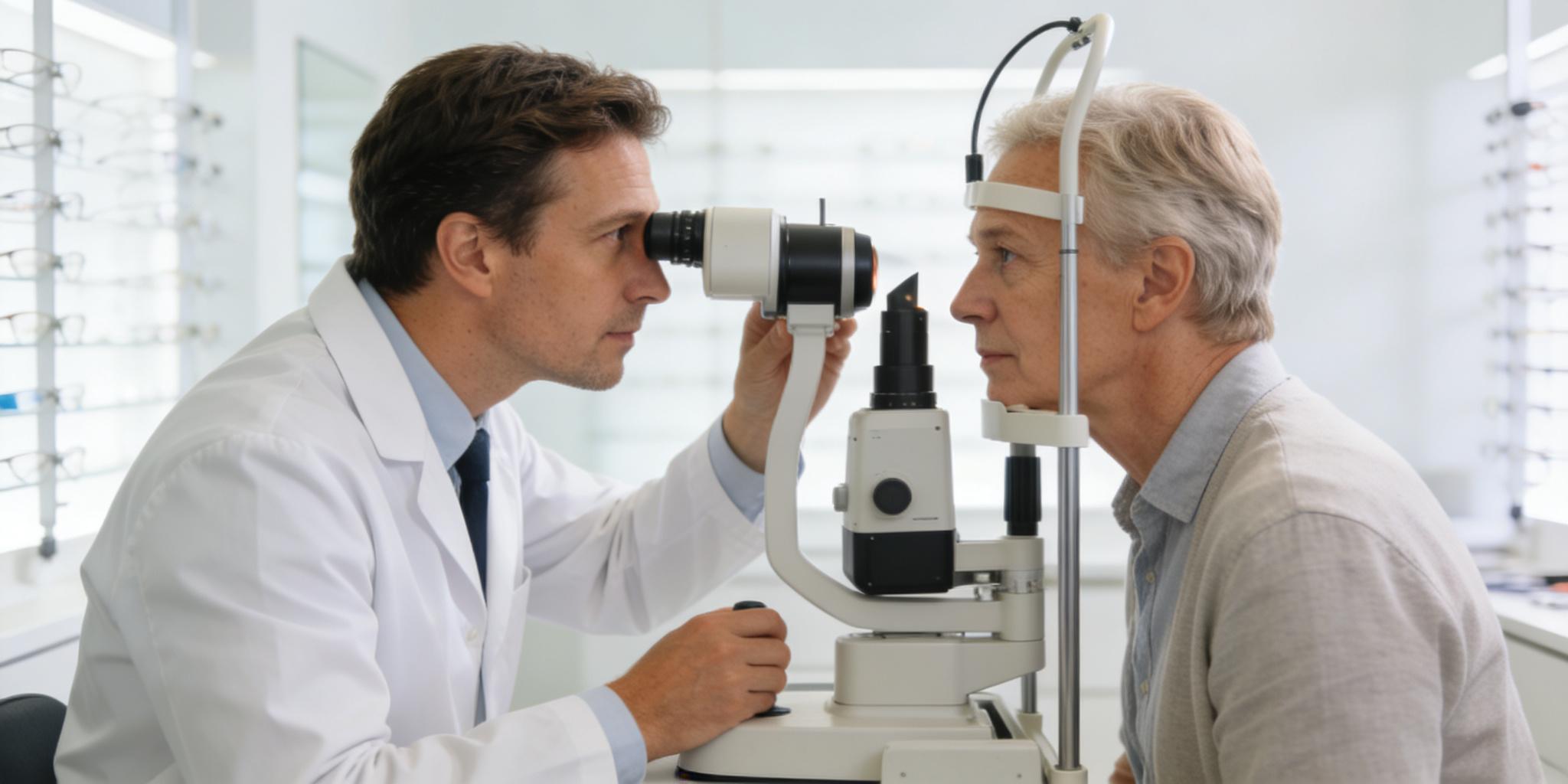
When your eyes send two slightly mismatched images to the brain, your "Visual Cortex" (the brain's image processor) has to work overtime to "stitch" them together. This constant background calculation is what leads to mental fatigue and that "heavy" feeling at the end of the day. A professional examination ensures each eye receives its own specific "prescription for comfort."
❌ Mistake #2: Ignoring the Shape of Light (Astigmatism) ❌
Many of us believe that blurriness is simply a matter of "strength" or magnification. If things are blurry, we think we just need a "stronger" lens. However, blurriness is often about the shape of the light, not just its size.
1. The "Rugby Ball" vs. The "Basketball"
If the front surface of your eye (the cornea) isn't a perfect sphere like a basketball, but more curved like a rugby ball, you have what is known as Astigmatism.
- The Limitation of Street Glasses: Ready-made readers are simple, flat magnifying lenses. They can make the letters bigger, but they cannot correct the "tilt" or "ghosting" caused by astigmatism.
- The "Ghosting" Effect: You might see the letter "A" clearly, but it has a faint shadow or "tail" next to it.
2. Chronic Digital Strain
When you use a simple magnifier to read a glowing screen, the "ghosting" becomes even more intense due to the light emission. Your brain tries to "edit" out these shadows, but it is an exhausting process. This is why you might feel the urge to take a nap after only a few pages of reading—your brain is simply overtaxed from "image editing."
❌ Mistake #3: Missing the "Optical Center" ❌
Every high-quality lens has a specific "sweet spot" called the Optical Center. For you to see comfortably, this center point must align perfectly with the center of your pupil.
1. The Pupillary Distance (PD)
The distance between your pupils is as unique as your fingerprint. Some people have eyes closer together; others have them further apart.
- The Mass-Production Problem: Ready-made glasses are built for an "average" face.
- The "Prism Effect": If your eyes don't match that specific average, you are looking through the "side" of the lens. This creates a prism effect, which physically "bends" the light.
2. Muscle Exhaustion
Because the light is bent, the tiny muscles that move your eyes have to pull and tug all day long to keep the images from overlapping. You don't feel the tugging, but you feel the result: Eye strain, neck tension, and unexplained irritability. Professional fitting measures your PD down to the millimeter to ensure the light hits the center of your eye perfectly.
III. Quality of Material: The "Acrylic" vs. "Optical Grade" Gap
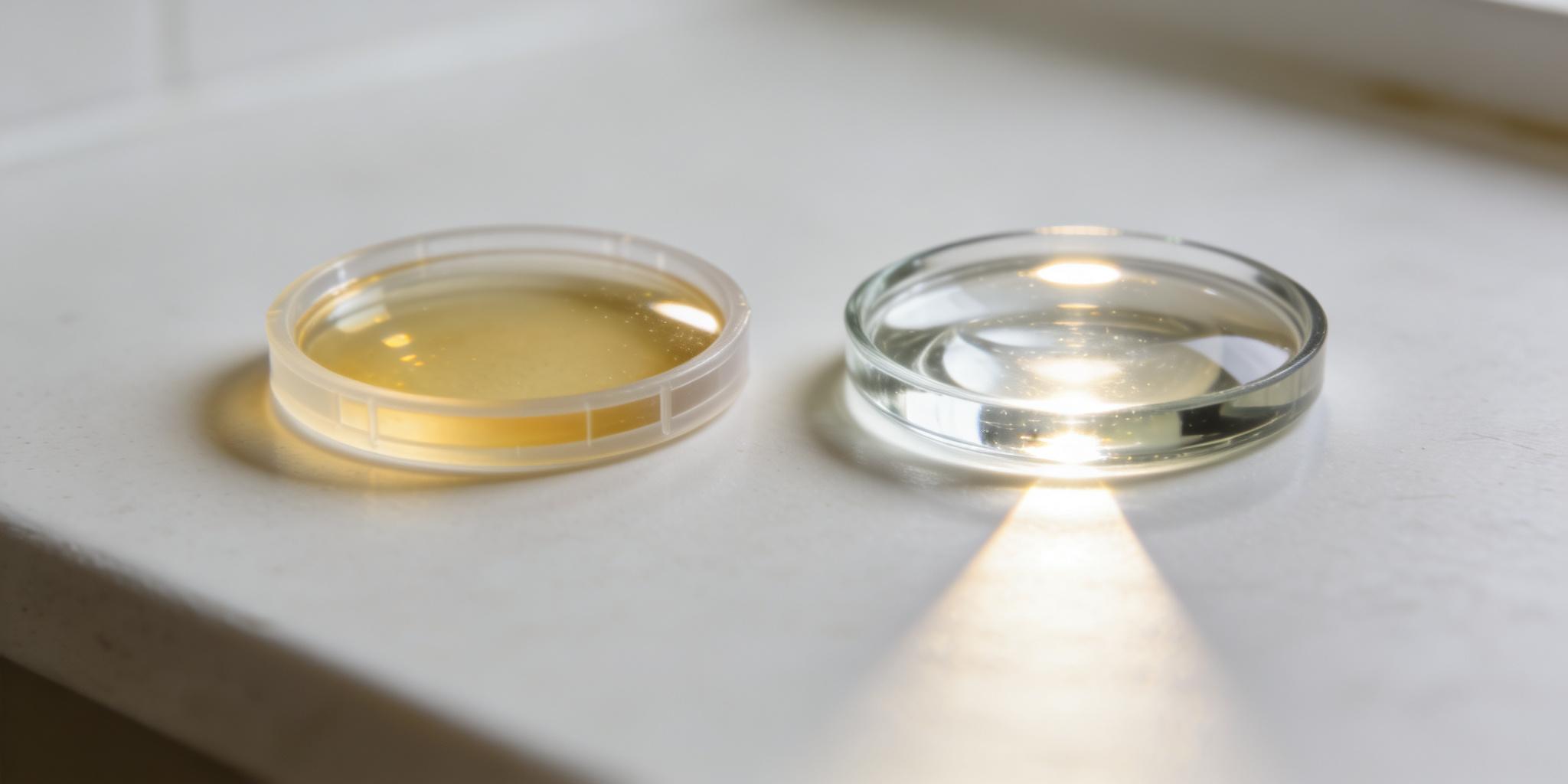
Why does a $5 pair feel so different from a high-quality pair? It often comes down to the material the light has to travel through.
- ⭕Light Transmission: Street stall glasses are often made of injected acrylic or cheap plastic. These materials often have "impurities" or microscopic bubbles that scatter light. This makes the world look slightly "grey" or "dim."
- ⭕The Constant Search for Light: Because the lens material is poor, you find yourself constantly needing "more light" to see. You might think your eyes are getting worse, but the lens is actually "stealing" the light before it reaches you.
- ⭕The Coating Advantage: Professional lenses include Anti-Reflective (AR) coatings. This eliminates the reflections on the surface of the glass, allowing nearly 99% of light to enter your eye, resulting in a much crisper, "high-definition" experience.
IV. Professional Maintenance: How to Care for Quality Lenses

If you invest in a high-quality pair of glasses, they can serve you faithfully for years if you follow the "Guardian's Rules" of maintenance.
1. The "Dry Wipe" Danger
Never, ever wipe your glasses with a dry cloth, a paper towel, or the hem of your shirt.
- ❓Why? Dust particles are often made of tiny bits of silica (rock). Wiping them dry is like rubbing sandpaper across your lenses. Over time, this creates "micro-scratches" that make your vision feel cloudy.
- ✔️The Correct Way: Always rinse your glasses under a gentle stream of lukewarm water first to wash away the dust.
2. The Dish Soap Miracle
You don't need expensive sprays. A single drop of mild, lotion-free dish soap is the best cleaner.
- ✔️Method: Gently rub the soap on the lenses and frames with your fingers, rinse thoroughly, and pat dry with a clean, dedicated microfiber cloth.
- ❌Avoid: Ammonia-based window cleaners or heavy hand soaps with moisturizers, as these can strip away the delicate anti-reflective coatings.
3. The Two-Hand Habit
Always take your glasses off with both hands.
- ❓Why? Using one hand pulls on the hinge and gradually warps the frame. This changes the "alignment" of the optical center, eventually bringing back that sea-sickness feeling even if the lenses are perfect.
V. Interactive Checklist: Is Your Current Eyewear Working?

Check your current "primary" glasses against these four questions:
- The Distortion Test: Hold your glasses 6 inches from your face and look at a straight line (like a door frame). Move the glasses slowly left and right. Does the line "bend" or "wiggle" like a wave?
- 🔹 If yes, the lens quality is poor. 🔹
- The Weight Mark: When you take off your glasses, do you have deep red indentations on the bridge of your nose that last for more than 10 minutes?
- 🔹 If yes, the frame ergonomics are wrong for your facial structure. 🔹
- The Surface Fog: Look at your lenses under a bright lamp. Do you see a "haze" of tiny scratches, even after cleaning?
- 🔹 If yes, light is scattering before it hits your eye, causing unnecessary fatigue. 🔹
- The Night-Reading Limit: Can you read comfortably for 30 minutes without feeling the need to rub your eyes or take a break?
- 🔹 If no, your brain is likely over-compensating for a mismatch in strength or PD. 🔹
VI. The "Visual Asset" Strategy for the Wise

We have spent sixty or seventy years looking at the world, and the next twenty should be just as clear. Our eyes are our connection to our family, our hobbies, and our safety.
- The "Primary & Emergency" System: Invest in one high-quality, professionally fitted pair for your "Deep Reading" (books, tablets, long letters). This pair stays in your dedicated reading spot.
- The "Five-Minute" Spare: If you must use a cheap pair, keep them in the car or the kitchen drawer only for "emergencies", such aschecking a price tag or reading a quick recipe. Never use them for more than five minutes at a time.
- The Annual Check-Up: Vision changes quietly. An annual visit to a professional isn't just about glasses; it's a check on the "health of the wallpaper" (the retina) and the internal pressure of the eye.
VII. Optimizing Your Reading Room

Even the best glasses will struggle if they are forced to compete with poor lighting. As we age, our pupils become smaller and the lens naturally yellows, meaning a 60-year-old eye requires roughly three times more light than a 20-year-old eye.
💡 The "Layered Lighting" Strategy
Avoid reading with a single bright lamp in a dark room. This creates a "Spotlight Effect" that tires the pupils.
- Ambient Light: Keep a soft, general glow in the room (up-lighting that bounces off the ceiling is best).
- Task Light: Use a dedicated lamp for your book. Place it below eye level and to the side (the left side if you are right-handed) to avoid casting shadows across the page.
💡 Choosing the Right "Temperature"
When buying LED bulbs, look for the Kelvin (K) rating:
- Natural Daylight (4000K - 5000K): This is the "Sweet Spot" for reading. It provides a crisp, neutral white that makes black text "pop" against white paper without harsh blue glare.
- Warm White (2700K - 3000K): Best for relaxing in the evening, but offers lower contrast for fine print.
💡 Managing the "Digital Glow"
If you read on a tablet, ensure the screen isn't the brightest thing in the room. If the screen looks like a glowing lantern in a dark cave, your room is too dim. Increase your ambient room light until the screen "blends" into the environment to prevent rapid eye fatigue.
Summary: Don't Settle for "Good Enough"

Don't settle for bargain-bin glasses that force your brain to work overtime. Invest in one high-quality, professionally fitted pair for your "Deep Reading" and keep it in your dedicated spot. Pair those lenses with a well-lit room, and you will find that you can enjoy your favorite books for much longer without a hint of tension.
Next time you see that box of colorful glasses at the market, give them a polite wave and keep walking.